

You’re exhausted. You lie down and your mind won’t stop running.
If that’s a familiar pattern, the problem might not be your mind at all. It might be your body. Physical tension from a long day, tight hips from sitting, a locked-up upper back from your desk, doesn’t just disappear when you lie down. It often follows you straight into bed and keeps your nervous system from fully settling.
A short stretching routine before bed can change that. Not a workout. Just a deliberate few minutes of release that tells your body it’s safe to power down.
Here’s a full routine you can do tonight.
1. Forward Fold
Targets the hamstrings, lower back, and calves.
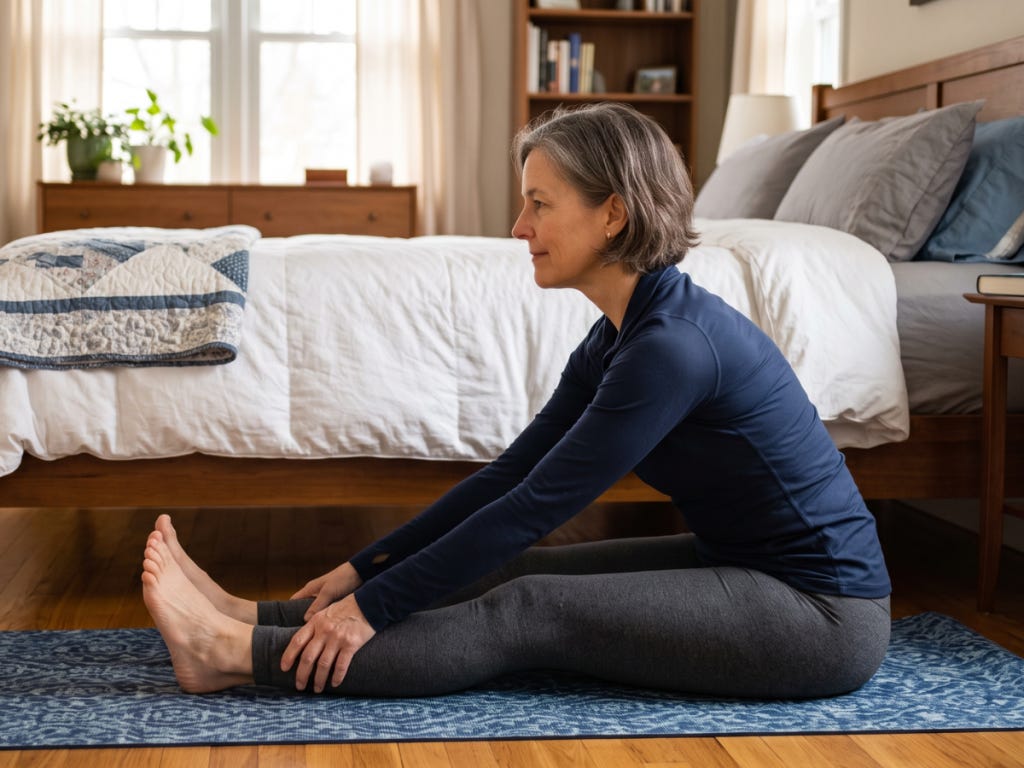
Seated: Sit with your legs extended in front of you, toes pointing up. Keep your spine long and hinge at your hips, reaching slowly toward your toes.
Standing: Stand with feet hip-width apart, bend at your hips, and let your upper body hang toward the floor.
Chair version: Sit with your legs straight out in front of you, toes up. Keep your spine long and hinge forward at the hips.
Breathe deeply and hold for at least 30 seconds.
2. Legs Up the Wall
A gentle inversion that reduces swelling in the legs and calms the nervous system.
Sit next to a wall and swing your legs up so your lower back rests on the floor and your legs extend vertically against the wall. Stay here for 2 to 3 minutes, breathing slowly.
If getting your legs up the wall isn’t accessible, elevate them any way you can, a recliner with pillows under your legs works just as well. The goal is simply getting your legs above your heart.
I recommend doing this while reading a book (not looking at your phone) to achieve full bed time relaxation.
3. Cat and Cow
A dynamic stretch that releases tension along the spine and improves mobility.
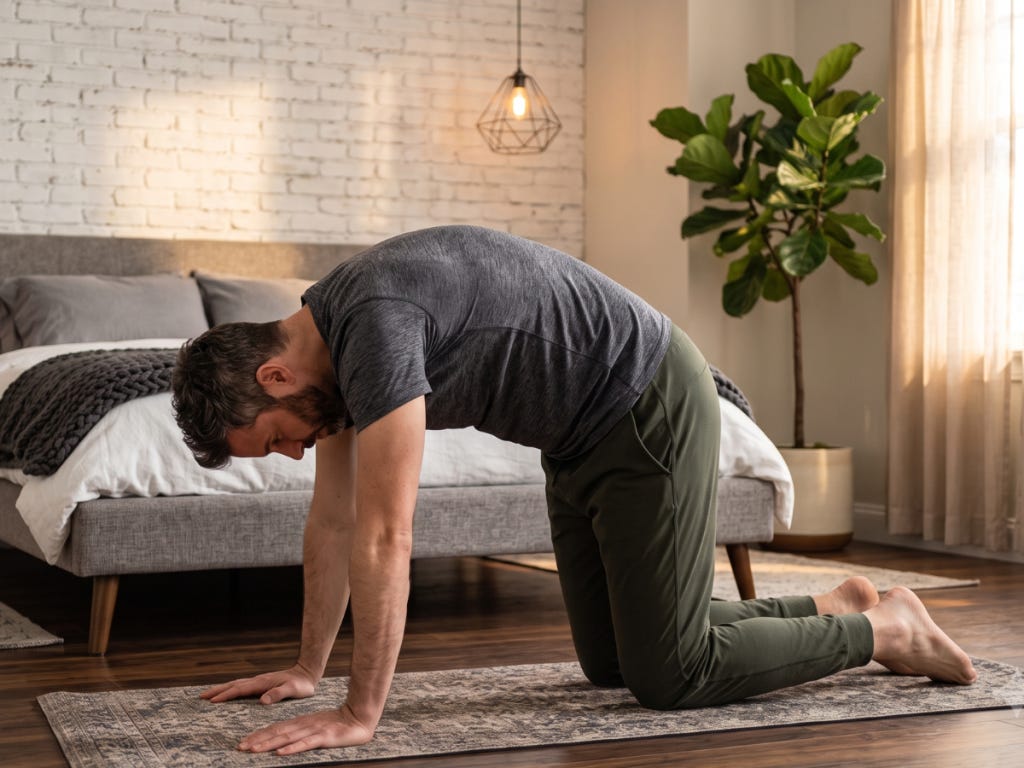
Start on all fours, hands under your shoulders, knees under your hips. Inhale, arch your back, lift your hips, and look up. Exhale, round your spine, tuck your tailbone, and bring your chin toward your chest. Repeat for 1 to 2 minutes.
If getting on the floor isn’t comfortable, this can be done seated, moving through the same motion. Do not strain here. Move through a comfortable range of motion.
4. Child’s Pose
A calming stretch for the lower back, hips, and shoulders.
Kneel with your big toes touching, sit back on your heels, and extend your arms forward as you lower your forehead toward the ground. Hold for 1 to 2 minutes, breathing deeply.
If the floor isn’t an option, sit in a chair with your knees bent and reach forward instead.
5. Pec Stretch
Opens the chest and upper back, two areas that tighten significantly from desk work.
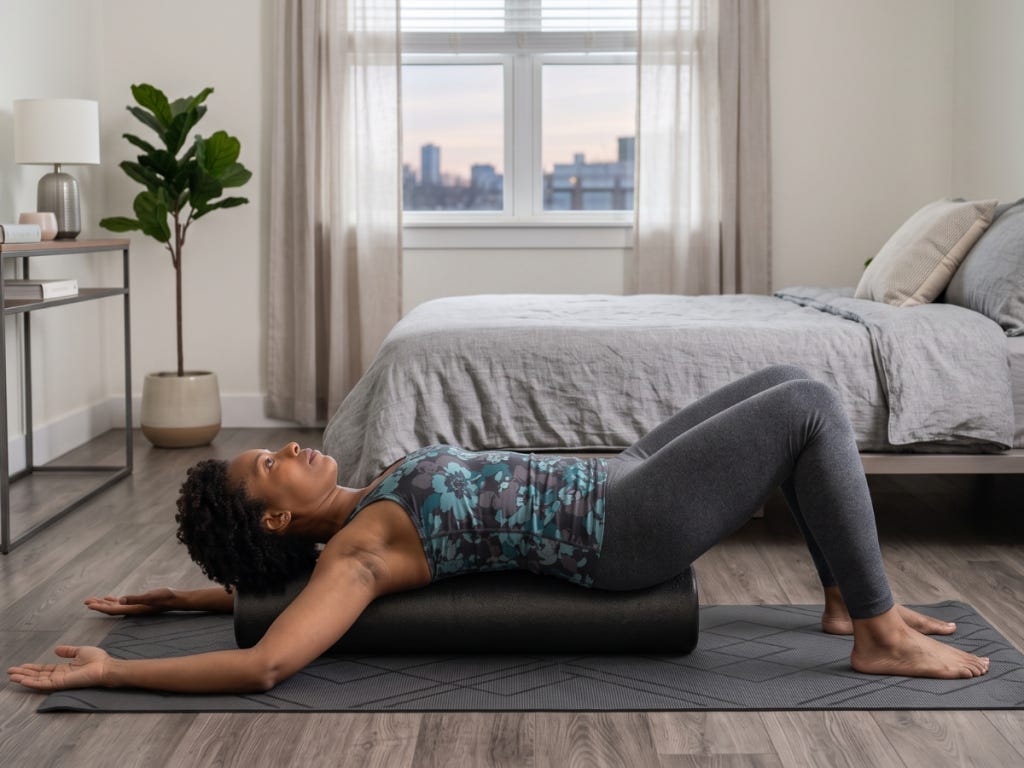
Lie on your back with a foam roller positioned lengthwise under your spine, supporting your entire back. Stretch your arms out to the sides in a T shape and breathe deeply, feeling your chest and shoulders release. After 30 seconds, move your arms into a W shape and hold for another 30 seconds. If your arms start tingling, rest.
No foam roller? Stand facing an empty corner, place your hands and forearms on each wall, and lean your nose into the corner until you feel the stretch across your chest and shoulders.
6. Lying Twist
A gentle spinal twist that releases tension in the lower back.
Lie on your back with knees bent and feet flat on the floor. Drop your knees to one side while looking toward the opposite side, keeping your shoulders and arms grounded in a T or goalpost position. Hold 30 seconds to 1 minute, then switch sides.
If the floor isn’t accessible, sit tall in a chair and rotate to one side, knees pointed outward, then repeat on the other side.
7. Figure Four Stretch
Targets the hips and glutes, particularly helpful after a day of sitting.
Lie on your back, cross one ankle over the opposite knee, and pull the uncrossed leg toward your chest. Hold for at least 30 seconds, then switch sides.
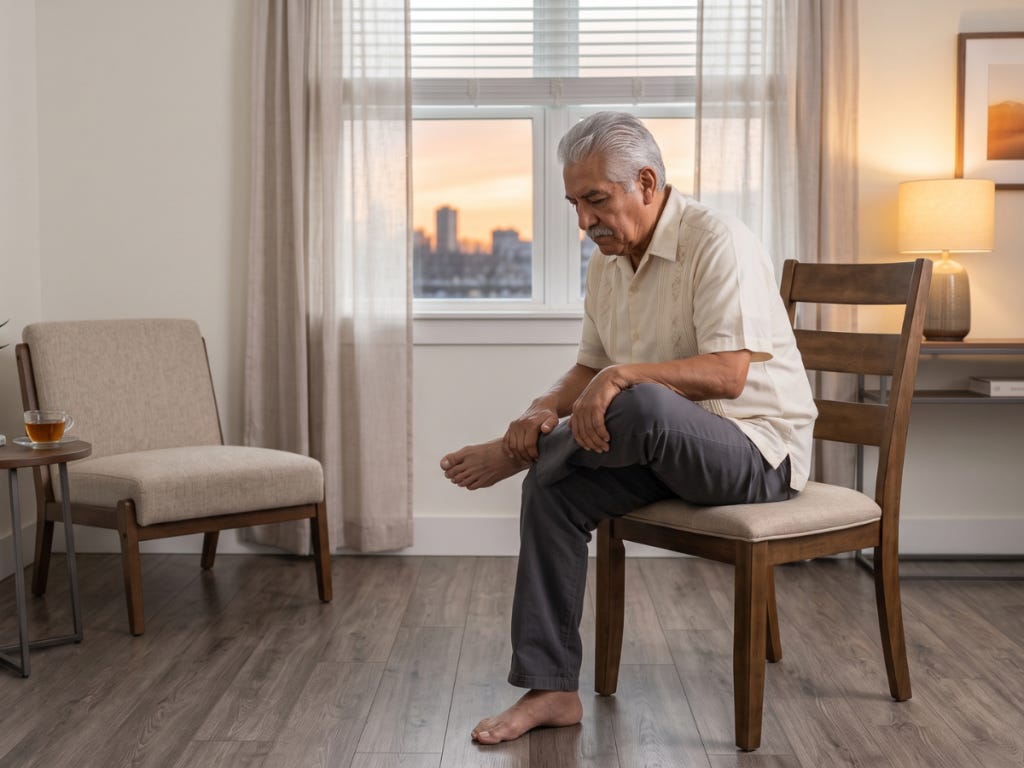
If you can’t get on the floor, sit in a chair, cross one ankle over the opposite knee, and lean your body forward with a straight back. Repeat on the other side.
Why This Actually Helps You Sleep
This isn’t just about flexibility. Stretching before bed gives your body a clear signal that the day is over.
Physical tension and nervous system activation are closely linked. When your muscles are tight, your body often stays in a low state of alert without you realizing it. Slow, deliberate stretching combined with deep breathing activates your parasympathetic nervous system, the part responsible for rest and recovery, and helps shift you out of that alert state.
This is the same principle behind AcuDetox, which I offer as an add-on to massage sessions. Both approaches work on the same goal: helping your nervous system downshift from stress and protection into genuine rest. If you find that stretching alone isn’t fully quieting your mind at night, AcuDetox might be worth exploring as an additional tool.
Make It a Habit
You don’t need to do all seven stretches every night. Even two or three, done consistently, can make a noticeable difference in how easily you fall asleep and how rested you feel in the morning.
The goal isn’t perfect form. It’s giving your body permission to let go of the day before you ask it to sleep.
Still Waking Up Tight or Sore?
If you’re stretching consistently and still waking up stiff, achy, or unrested, that’s often a sign of deeper muscular restriction that stretching alone can’t fully resolve.
If this was helpful, subscribe for more. I write about pain science, athlete recovery, and keeping your body doing what you love for a long time.
And if you are in the Louisville, CO area and want to work together, you can book a session at kimskim.com.